Showing posts with label Personal Stuff. Show all posts

Saturday, November 29, 2025

Jim Participates in the Abolition Walk

 As with most people who have lived more than three-quarters of a century, I have a few pet peeves. I’m aggrieved that we don’t use math classes to teach kids the skills they need to avoid making terrible financial decisions as adults because they don’t know better. (If someone knows and wants to make the same bad decisions, I cringe, but it’s their choice.) Another thing that concerns me is our general woeful lack of knowledge about history, and willingness to believe politicians with historical “facts.”

For example, did you know that the maximum federal estate tax was 77% from 1941 through 1976? Yup, and most states had estate taxes as well. The top marginal federal income tax rate hit 94% in 1944-45! It stayed at 70% or above from 1936 through 1980. Keep that in mind when today's gazillionaires complain about today’s “ruinous” tax rates.

My son, daughter, one sister, and me being recognized at the
2025 Abolition Walk as descendants of James Caleb Jackson

Which leads me to another area where many are blowing smoke: slavery and the Civil War in the United States. The secession of the states that formed the Confederacy was driven by concerns by the wealthy slaveholders that the Republican Party, antislavery as they were, would strip them of their major asset: other humans that they owned. Oh sure, the southern states had other grievances, but their articles of secession mention only slavery.

And those living in the northern states often paint their history as righteously against slavery. They ignore that New England ships took part in the slave trade, and that until well into the 1850s anti-slavery movements were despised more than approved. Just as today when both sides of many issues cherry-pick Bible verses to “prove” their point, Americans were passionately doing the same with slavery. Which brings me to the Abolition Walk.

In 1835, 600 delegates met at a Presbyterian church in Utica, New York to organize the New York State Anti-Slavery Society. (The City of Utica revoked its previously issued permit to meet at the City Hall, and members of the church arranged the changed venue.) My great-great-great-grandfather James Caleb Jackson was a delegate. A large group of anti-abolitionist protesters, led by Congressman Samuel Beardsley, threatened violence, including burning down the building, unless the meeting dispersed. (They cited the slavery provisions in the Constitution for their justification, ignoring the assembly and free speech provisions in the same constitution.)

Gerrit Smith invited the delegates to reconvene the following day in Peterboro, NY (about thirty miles away). Some had carriages or horses. Jackson did not, having walked to Utica from his farm in Mexico, NY. He, and a William M. Clark of Syracuse, convinced an Erie Canal packet boat to load up with 104 men and take them to Canastota, the city closest to Peterboro. Then the two of them led the group on foot for the 9.1 miles from the canal to Peterboro. As they got close, Jackson went on ahead (i.e. walked faster up the hills—Peterboro is about 900’ higher than Canastota) to arrange breakfast for 100 at a tavern. Later that day, Jackson was one of the signers of the articles forming the NYS Anti-Slavery Society.

Peterboro is home to the National Abolition Hall ofFame and Museum. Some of those involved with the museum created an annual commemorative walk to remember these events. This being the 190th anniversary—and as a former actuary knowing the likelihood of my making it to celebrate the bicentennial of the event is not great—I convinced most of our small family to join me on the walk. There are only five living ancestors of James Caleb Jackson. Four of the five of us made it, and Jan came along with me, so we had five participating in this year’s walk.

The weather was cool and sunny, great for walking the 5.4 miles (up to Clocksville and back). Jackson’s name and picture are on the historical markers present in both Canastota and Clocksville that provide information about the walk. His memoir provides the only extant first-person account of the walk.

During the day, I talked with many of the participants, organizers of the event, caretakers of the Abolition Hall of Fame and Museum, descendants of former slaves whose ancestors had taken the Underground Railroad to the area, and others, like us, keeping the memory alive, knowing there is still work to be done.

Someone asked me if I was proud to walk in the footsteps of my ancestor. My answer was no; I was humbled to walk in his steps. James Caleb Jackson was twenty-four years old. Some are born to lead.

History shows that serious issues affecting nations are significantly more complex than suggested by the black and white of social media and news headlines. Historical novels, and even contemporary thrillers like I write, can explore that complexity when they incorporate issues such as militias, illegal immigrants, big corporations, the environment, and different rules for the powerful and the powerless.

Writers, how do you handle those issues? Readers, what books have you read that did a good job addressing complex issues without turning preachy?

* * * * *

This post originally appeared on Writers Who Kill on November 4, 2025

James M. Jackson writes justice-driven thrillers with brains and bite, including the Niki Undercover Thriller series and the Seamus McCree series. To learn more information about Jim and his books, check out his website, https://jamesmjackson.com. You can sign up for his newsletter (and get to read two free short stories, one featuring Niki and Seamus and the other taking place at Seamus’s camp in Michigan’s Upper Peninsula).


Thursday, October 6, 2022

Earworms

As I write this, I am starting day five of a nearly month-long road trip. Starting from Madison, Wisconsin, we’ve traveled through Iowa (rolling hills until the Missouri River, after which it flattens out), Nebraska (through the sand hills and up onto the high plains), and into the middle of Wyoming with its vistas of mountains in the future. (You can follow the trip on Facebook, where I post pictures every fifty miles on the truck’s odometer. Here's a link to get to the album.)

On day one, we planned to stop in Dubuque, Iowa for lunch on the bluffs overlooking the Mississippi River. That didn’t happen. Fifty-eight miles into the trip at our first pit stop, I realized I had forgotten my key fob (Jan had hers, so the truck ran), which resided in my fanny pack. The same fanny pack that held my wallet and its assortment of credit cards, IDs, and proofs of insurance.

Not only did that extra 116 miles result in some interesting 50-mile pictures (picture 1 was 50 miles from Madison, picture 2 was only 16 miles away from Madison, and picture 3 just 34 miles), but it meant we were running a couple hours behind schedule after a leisurely mid-morning start. We lunched in the car and made no stops in Dubuque.


Which brings me to the earworm. One of my favorite pop groups in high school and college was The Association. A song contained on their 1969 album titled, The Association, is “Dubuque Blues.” [Here's a YouTube version from their appearance on The Ed Sullivan Show]. Several days before the trip started, that song became an earworm for me. I’d find myself humming the tune or singing lines of the lyrics (those parts I remembered). After Jan told me to find another song, I began singing in my head.

I figured that once we had lunch in Dubuque, I’d kill the earworm because I had done Dubuque.

We’ll never know if that theory was correct since we didn’t picnic there. The earworm is still present four days later. I will now turn to active measures: whenever I catch myself channeling “Dubuque Blues,” I will drown it out by starting another song—preferably one that won’t turn into its own earworm.

How about you? Do you suffer from earworms? (Or should I say, do others suffer from your earworms?) How do you break that habit?

* * * * *

James M. Jackson authors the Seamus McCree series. Full of mystery and suspense, these thrillers explore financial crimes, family relationships, and what happens when they mix. You can sign up for his newsletter and find more information about Jim and his books at https://jamesmjackson.com.

This blog first appeared on the Writers Who Kill Blog.

Wednesday, March 2, 2022

Obstacles

 In February, I taught a class for the Guppy Chapter of Sisters in Crime, Inc. to help students learn how to revise and self-edit their novels. In one lesson, I challenge the students to take a scene and brainstorm for five minutes on how to ramp up the stakes for the protagonist.

And then, I lived my homework assignment.

I own 80 acres on an inland lake in Michigan’s Upper Peninsula. (Fact check: Seamus McCree, the protagonist of my series, claims he owns the same property. In fiction, he is correct; but if you check the register of deeds, it belongs to me. But I digress.)

My bucket list includes me producing maple sugar from the sugar maples on my property. I’ll spare you my enthusiastic and long-winded discussion of what that will entail and instead mention that ticking that off my bucket list meant I need to arrive at my camp many days before daytime temperatures rose above freezing. My home is 15 miles from where you can buy anything. Fourteen of those miles are logging roads. Because of where the timber companies were logging this winter, they were not plowing the last 2.5 miles of my journey.

I had arranged for someone who lives six miles away to keep those last 2.5 miles open, which he had done, until a week before I planned to arrive, his snowplow broke. (Increased obstacle #1) And then it snowed 10” (0bstacle #2). My neighbors who were coming up just for the weekend (because I had kept the road open, so why not?) contacted a business who agreed to plow the road—at a cost six times what I had been paying (obstacle #3). A shared expense. It only hurt a little.

My original plan was to arrive on February 24, but looking at the snow forecast, I decide to drive up instead on Saturday, the 20th to arrive before the snow. Driving the last 2.5 miles, I note several places where the road is just wide enough to get my truck through.


I arrive at noon and snowshoe my driveway through thirty inches of snow, sprawling several times (a minor additional obstacle). My neighbor follows behind to help me reinstall my water softening system. We were halfway down the driveway when he spots my first problem: the platform we had installed on my garage roof to hold the Starlink dish, has toppled onto the roof. (Obstacle #4). I still have a week of teaching the revision and self-editing class. If the Internet is out, I’ll have to drive twenty-five miles to gain internet access to post and respond to class assignments.

My neighbor returns home to get a plastic snow shovel to clear the roof without damaging it so we can reinstall the platform. I plod to my generator shed to turn on power to the house and garage and discover my inverter has no power. (Obstacle #5) The generator kicks on, and I bypass the inverter to provide power directly to the house, which I need to run the well-pump.

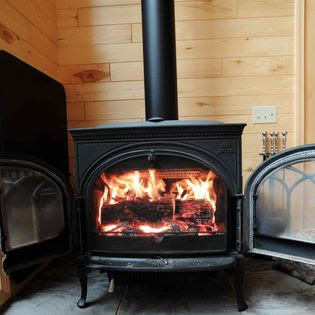
But before I deal with the water supply, I need to light a fire in the wood stove. It is ten degrees outside and twenty degrees in the house. I place crumpled paper and kindling in the wood stove, click the fire starter—and nothing. Okay, we’d used that one last year. I had spares. I try the spares—same result. It is too cold for the fire starter to work. (Obstacle #6) I eventually find matches and light the paper. The thirty-five-foot stove pipe and cold temperatures require several efforts before the stove creates a draft, but finally, the wood stove is operational. Yay!

When my well pump hasn’t run for months, the water in the well can become sullied with iron-oxide particulates. I let the well pump run for an hour and by then, the water runs clear. I have a drain to the outside in the basement floor where I can dump the water. The well pump starts like a charm. Water fills the pressure tank. I open the spigot at the bottom of the tank so the water can run out through an attached hose to the drain.

Except, the drain is frozen. Water pools onto the basement floor. (Obstacle #7) I shut the spigot and wonder what else could go wrong.

Upstairs the answer is clear: the woodstove fire has gone out. I have been home for an hour, and other than starting the generator, have accomplished nothing.

I restart the wood stove fire, babysitting it until I am sure it takes. My neighbors return with a snowblower to cut a path down the driveway (they don’t want to wade through that snow) and set about restoring the internet platform to its correct position. My fears that when the platform tumbled it cut the cable turn out unfounded (best news so far).


We turn our collective heads to figuring out why the inverter isn’t functioning. I flip every switch I can think of off and on to reset something—anything. No success. No inverter. No solar power. No functioning batteries. I think to test the voltage of the batteries. My 48-volt system is measuring around 12-volts. My batteries are frozen. At least I have electric when the generator is on.

The neighbors decide to snow blow the driveway so I can bring my truck down rather than schlepp everything in by hand, and I return to the water situation. Although it would take less time to run a hose from the water tank outside, that requires me to crack a door to the ten-degree temps. Instead, I plan to run water into five-gallon buckets that I will throw outside until the well water runs clear. I take the bucket to the basement and discover most of the spilled water from my first attempt has frozen on the basement floor.

I skate to the pressure tank, turn on the water pump, open the spigot, and nothing happens. Not only is the water on the floor frozen, but frozen water also plugs the hose. I no longer have access to any water. (Obstacle #8)

No problem, I begin to melt snow on the wood stove. It’s not fast, but I can create a sufficient supply of fresh water and eventually enough for a flush toilet. And, because I don’t want the water that is freezing in the hose at the bottom of my water tank to break something else, I use a portable propane heater to (hopefully) warm up the fittings.

Day turns to night. I cook dinner, wash the dishes, read a little, and clamber into bed. The house has warmed up to 50—perfect sleeping temperatures, but every time I wake to use the bathroom, I add more wood to the stove.


Sunday arrives with bright sunshine. I sweep accumulated snow off my larger bank of solar panels, continue to run the generator to create a hothouse to warm my batteries, and melt copious amounts of snow. The basement makes it above freezing and the directed heat on the water tank thaws those fixtures. I start my project of getting clear water and can stop melting snow. I run ten gallons of water through my pitcher with a Brita filter to create drinking water. The house reaches sixty degrees by noon.

A local friend who is an electrician at the open pit iron ore mine stops by to look at the inverter. He flicks some switches and first the solar panel controller comes alive and then the inverter. All switches I had tried before, but we conclude that the power from the solar panels was enough to allow the controller to reboot. Progress, but the batteries are still very frozen.

That evening the snows begin, dropping 4” by morning. My Bobcat works like a charm plowing the 2.5 miles. I need four passes and spend time in a few areas getting the road wider where it is drifted in. I’m a happy camper. However, Jan, who has wisely stayed behind until I have camp opened, wants certain conveniences, like running and hot water. I don’t dare put water into the pipes until I know the basement will stay above freezing on a -16F night. Otherwise, I risk freezing the indoor plumbing.

I try using fans to push warmer air down the basement stairs. It works, the basement warms to 42. I turn off the fans, and the temperature drops. I turn them back on.

Monday night into Tuesday it snows another 7”. Wednesday morning, I fire up the Bobcat, pull it out of the garage and the rope attached to the garage door becomes entangled with the skid steer, pulling the door down. The Bobcat cracks into the partially closed door, pushing it off the track and wounding the bottom section. If I can’t get the Bobcat out of the garage, I will quickly become snowed in. (Obstacle #9)

I wrangle the garage door up enough to slip the Bobcat out and leave that issue for later. The skid steer plows, but because the snow walls are so close, it is hard work to get rid of the new snow. I make it out the 2.5 miles and notice a grader has gone up the next road. (Logging companies use graders to plow roads.) I wait and flag him down on his return. It’s a guy I don’t know, but he stops. (Out in the near wilderness, we always stop to make sure people are okay.) I ask how much it would cost for him to widen my 2.5 miles. I agree to his $300. (I’d spend at least that in diesel to widen it with the Bobcat.)

He does a fine job and now I don’t have to worry about the road closing in with a major snowfall. And I’m thrilled when I check and see the batteries have thawed enough that the inverter can control their charging. I remove the bypass, hold my breath, and am thrilled when the inverter turns on the generator and the batteries charge.

Things are looking up, big time.


When the grader pushes back big snowbanks, some snow will tumble back over the blade. I decide to be a nice guy and clean up the road now before my neighbors will be up tomorrow for “Girls’ Weekend.” At 2.25 miles from my house, I veer too far into a snowbank, bury the Bobcat, and because at that point the road slants, I cannot extract it. I will need to tow it out. (Obstacle #10)

I walk home, which I don’t mind, and after consulting with my neighbors, decide to leave the skid steer in place until they come up because it will be much easier to extract it from the snow with one person in a truck and another in the Bobcat.

Thursday arrives with more sun, charging batteries, neighbors arriving safely, and late that afternoon, we extract the Bobcat with my truck.

Friday the house has been warm enough for long enough that the basement is staying over 40F, and I risk turning on the water. It is always a worrisome time because if I didn’t successfully drain the house of water the previous fall, I learn I screwed up when I hear water flowing from the middle of a burst pipe. Everything works. I soon have hot water, too, and celebrate with a shower.

We had minor bobbles installing the water softener system (and need an O-ring to complete the task), but as of this writing, the systems all work. The house is a comfy 70F and Jan will arrive March 1.

Next time I teach, I think I’ll try something like writing dialogue without the use of “said.”

* * * * *

James M. Jackson authors the Seamus McCree series. Full of mystery and suspense, these thrillers explore financial crimes, family relationships, and what happens when they mix. You can sign up for his newsletter and find more information about Jim and his books at https://jamesmjackson.com.

* * * * *

This first appeared on the Writers Who Kill blog.

Thursday, April 8, 2021

Girls’ Weekend (If you live through it, it just becomes fodder for stories.)

Many of you know my heart lies at my place in the wilds of Michigan’s Upper Peninsula, regardless of where my body resides. It’s on an inland lake, fifteen miles of dirt and gravel roads from where you can buy anything, and the setting for two of my novels (Cabin Fever and Empty Promises). Unless the logging companies are working in the area, the only way in during the winter is snowmobile.


The 250-acre lake has only six resident structures plus another half-dozen properties with trailers or tent sites for occasional visits. Lucky for us, our nearest neighbors are wonderful folks. For several years, some of the family women (mother, daughter, daughter’s partner, and daughter-in-law, and four female dogs) have adopted the practice of a fall girls’ four-day vacation barring husbands, sons, brothers, nephews, etc. from camp (or for at least part of the weekend).

The women love to explore the woods and nearby lakes, taking long walks and ATV trips. Since I’ve been in the area longer, they have often invited me along as their “guide.” Now, you might think this breaks the spirit of girls’ weekend. But (if I do pat myself on the back), I do a pretty good job of being one of the girls. I may provide suggestions on where to go and what to see, but all decisions are theirs. They set the pace; on ATV rides, I take the last position allowing them to experience the unfamiliar territory at their tempo with the instruction that when they come to an intersection, they wait if they’re not sure which direction to take so I can point.

I’ve proven I’m comfortable working with women. I served as a board member for nearly a decade and president for two years of the (then 700+-person) Guppy Chapter of Sisters in Crime. And I’m a good listener, and do not fall into mansplaining when I’m with them. That’s easy since the four include a police officer, a full-time sergeant in the national guard, a healthcare worker, and the long-term manager of a business. I have never repeated any of their conversations to their family members.


A few weeks ago, the girls asked if I’d like to join them for their first go at a spring weekend. I was stoked to return north. We weren’t sure if we’d make the last two-and-a-half miles by snowmobile, by car, or on foot. Once they invited me, they figured they had better include the old man of the family (husband, father, father-in-law—depending on which woman we’re referring to). With everyone on board, we agreed the women would arrive on Thursday with minimal supplies since they might have to walk in. The guys would come up Friday morning towing either a snowmobile or ATV (depending on road conditions) and haul in the rest of the supplies.

The last weekend in March hit a sweet spot. Snow had melted sufficiently, but the roads were still mostly frozen and, with care and slow speeds, they drove both a Jeep and a car all the way to their camp. The tricky part was the last two-and-a-half miles where the center of the road was snow/ice packed solid by snowmobiles over the winter. They made it to camp before noon on Thursday, reported we should bring the ATV, and that because of the icy road center, we should only drive the F-150 to a landing a half mile before their camp.

We used my Outback and the Jeep to bring supplies from the F-150 to their camp. I parked at their place and humped my pack in the last 3/8ths of a mile to my house because that section of the road was a mixture of ice and bare areas that showed signs of frost heaves. With temperatures expected to rise above freezing, I was afraid I might get in fine, but not be able to get out. (Keep that thought in mind.)

At my place, I found the batteries fully charged from the solar panels, so I had electricity. I didn’t want to have to drain the entire house again when I left in two days, so I only brought water into the basement pressure tank where I attached a hose to draw buckets for drinking, dishwashing, and flushing toilets. The inside temperature was thirty-five. With cathedral ceilings, the woodstove would take hours to heat the house, but the girls were eager to continue their moose shed hunt from yesterday. Since I would need to babysit the fire until it was burning steadily, I left the house cold and off we went on our first exploration.

The morning jaunt included all ten of us (4 women, 2 men, 4 dogs). We were out for a couple of hours exploring our nearby woods, spotting lots of moose poop and browse[i], but no rubbings[ii] (where the bulls scrape their antlers against trees during the spring to eventually shed[iii] them and allow for new growth). That walk exhausted the dogs (part of the plan because they’d sleep while we went for our second, longer, exploration after lunch.)

The afternoon walk was just the girls and me. We walked miles through the woods and found areas with more moose scrapes than I’d previously seen in my lifetime. The bulls were beating the hell out of the hardwood saplings, but alas, we discovered no sheds.


I got back to my place about five-thirty and started my woodstove. By seven I had a good bed of coals and a packed stove that I knew would neither go out nor overheat, and I joined everyone for dinner and drinks around their campfire. That night I had the house temperature in the mid-fifties—perfect for sleeping—and with 28,556 steps for the day (mostly in snow), I slept well.


Saturday morning, I stocked the wood stove and brought the indoor temperature up to 68. That morning, the girls and I ATV’d to where we had turned around yesterday and explored several new areas (including one old skidder road[iv] I had not been on before!) Again, lots of moose sign but no antlers. In a wet area we came across a series of spots where the ice looked like topographical maps.


Saturday afternoon all six of us took the ATVs to property for sale that has a half-mile of river frontage. We had all walked the main road to the river but had never explored the rest of the land. Much of it is regrowth quaking aspen—a favorite of moose. We found fresh tracks suggesting we probably pushed a moose out ahead of us.


The girls located a perfect spot for a future cabin. When we returned to the ATVs, we discovered one of them had a flat tire. Our neighbors have a practice of writing each day’s activities in a camp diary, and each year they produce a limited-edition camp book of photographs recording the year’s activities. I said they needed to take a photo of the disabled ATV because it would surely become part of their story book if they bought the land. We left the wounded vehicle with the three youngest girls and returned with the other two ATVs to fetch a portable compressor. The tire just needed air, so everyone got back fine.

Temperatures had warmed from below freezing in the morning to the mid-forties in the afternoon, and the roads were getting sloppy in places. The weather forecast called for an overnight low of twenty-six with 1-2” of snow. We agreed we’d be better off waiting for roads to refreeze than risk tearing them up or slipping off the ice and sticking in mud.

After only 17,416 steps for the day, I again slept well, this time choosing to haul my sleeping bag onto the screened porch. (It’s my preferred sleeping spot unless temps fall below twenty.)

Before I went to bed, it started to snow and stick. I awoke to 3-4” of slippery white stuff.

We agreed to leave at noon and quickly learned we should have brought the cars out to the main road the night before. Within two hundred yards of their cabin, the front-wheel-drive car slid off the road. Four people pushing got the car back onto the icy middle, but going up the next rise, it slipped off again. This time we couldn’t push it out.

With most of our equipment sitting in the F-150 parked a half-mile away, we tried my small come-along[v], but the rope we had available was too stretchy to work. I pulled my Subaru Outback off the road and we positioned the Jeep with a front power winch to be next in line. The winch worked, and once the car was back onto the center, we backed it up enough so the Jeep could pass and take the lead. We then attached the car to the Jeep with a tow strap and had the Jeep pull the car the two miles to the main road.

The Jeep was steady; the car slipping and sliding all over the road. I followed next white-knuckling my way past places where my tires wanted to follow the car off the road. Once I passed the F-150, it followed in the clean-up position creeping along to keep the loaded trailer under control.

Halfway out, I slid off. I straightened my wheels and carefully reversed back onto the road. Whew.

A quarter mile further, I slid off again, this time four feet down a slope. I thought I could recover, but after reversing three feet, I was stuck. I texted the F-150. No response and after a few minutes still no truck. I hiked back a half mile and found them off the other side of the road.

With their stronger come-a-long and tow straps, they had pulled over a 4”-diameter pine tree and were now adding another tow strap to reach a large maple to use as an anchor point. With three of us working, we soon hauled the F-150 back onto the center. For a while we weren’t sure if the truck would pull the trailer out or the trailer would drag the truck back off, but the truck won. To extract my car, we attached the come-a-long and tow strap to my trailer hitch Easy Peasy.

We made it the rest of the way to the main road and caravanned without incident the remaining eleven miles to the paved road. A trip that normally takes thirty minutes, took two hours and forty-five minutes. I see an addendum coming to my neighbors’ weekend diary.

The moral of the story is to make sure you have the right tools AND people who know how to use them. Then it’s just an adventure and fodder for future stories.

I’m looking forward to the next girls’ weekend.


[i] Winter diet for moose (the Algonquin word for twig-eater) consists mainly of twigs from a wide variety of woody plants. They tend to grab a mouthful and move on – hence the term browsing. The chomped off ends of the branches are referred to as “browse sign” or “browse” for short.

[ii] Moose rub their antlers against small trees to mark territory, scrape off velvet, and work off their aggression during rut season (in the fall).

[iii] Each bull moose has two antlers, which they shed each spring. The fallen antler is referred to as a “shed.” Because they weigh so much, a moose with only one antler is lopsided and works hard to get rid of the second antler after dropping the first.

[iv] Temporary roads that loggers use to drag (or skid) trees out to a landing where they stack them for pickup are called skidder trails.

[v] A come-along is a hand-operated winch with a ratchet used to pull objects (or make them come along the path you want to drag them)

* * * * *

James M. Jackson authors the Seamus McCree series. Full of mystery and suspense, these thrillers explore financial crimes, family relationships, and what happens when they mix. Furthermore, a novella is the most recent addition to the series. You can sign up for his newsletter and find more information about Jim and his books at https://jamesmjackson.com.

This blog originally appeared on the Writers Who Kill blog 4/6/21

Wednesday, January 27, 2021

An open letter to my senators

Dear Senators Stabenow and Peters:

Jurors determine guilt or innocence under the law, not whether the law is constitutional. The courts make constitutional decisions. Nevertheless, forty-five of your Republican senate colleagues have taken the court’s powers and made them their own when they voted that it is unconstitutional to hold an impeachment trial for a president who is no longer in office.

It is important for our democracy that every senator vote on whether they believe the evidence presented in the upcoming impeachment trial suffices to convict former president Trump of the article of impeachment voted by the House of Representatives and delivered to the Senate. We must not allow any senator to sidestep a vote on whether Trump committed impeachable actions by instead declaring him not guilty by reason of the trial being unconstitutional.

Therefore, the Senate must delay the trial until the Supreme Court settles this issue. The Senate must send a formal request to the Supreme Court to prepare an opinion regarding the constitutionality of trying a former president on article(s) of impeachment approved by the House while the president was still in office.

If the Supreme Court deems the constitution does not allow this, the Senate should abandon the trial. The Senate and the House can then determine if censure or other sanctions are appropriate based on former president Trump’s behavior leading up to the January 6, 2021 riot at the Capital. If the Supreme Court deems the constitution does not prohibit such a trial, all senators will have to vote on the article of impeachment based on their view of the evidence presented.

I do not know the legal mechanism for having the Supreme Court take up this issue, but I believe it is critical to the future of our democracy that they do.

I encourage you and your colleagues to take the necessary actions.

James M. Jackson.
Amasa, MI

Wednesday, October 7, 2020

Recharging Batteries


We live on a lake deep in the woods of Michigan’s Upper Peninsula and must generate our own electricity; the nearest utility lines are more than ten miles away. When we constructed our house in 2005, we installed solar panels on the roof (to catch the sun above the tree line), a large battery bank, and a propane generator to provide a backup power source for rainy stretches, excess demand, and during the winter, when the sun is low in the sky (and for a short time at that).

Solar panels comprise many cells. Over time, some cells stop functioning at peak levels and the overall efficiency of the panels declines. You may have noticed something similar happens as we age, and our muscles aren’t as strong as they once were. Other than periodically cleaning the glass and removing snow in the winter, there isn’t much you can do for the panels.

Batteries need constant care. The charging process converts some water into hydrogen and oxygen molecules and creates water loss. (Kind of like breathing causes us to lose water.) We systematically refill them. After a few months of the same old, same old charging cycle, the battery bank can get a little out of whack. Counteracting that requires a ten-hour generator run to equalize the charges in each of the batteries’ cells. After that supercharge, the battery bank returns to peak performance.

Until it doesn’t. Eventually, batteries wear out, can’t hold charges for as long, and must be replaced. (Just like with your car, you can limp around on dying batteries, relying on jumper cables and the kindness of strangers.) Our weaker batteries meant the generator runs much more frequently, sucking down propane like a frat boy on a bender.

When we put in the original system in 2005, we determined the number of solar panels and batteries based on our expected electric draw. We’ve been well-pleased with our decisions, but what worked well was proving inadequate for 2020. We use more power than we did fifteen years ago. Computers are on 24/7; our aging eyes have us using lights more, and we forget to turn them off when we leave a room.

Despite promising improvements in batteries, not much has changed for the type I need (other than price, which increased a lot). Solar panels, however, have become more efficient and less expensive. Rather than replacing my old panels with newer ones, I asked: what would I do if I were starting fresh?

Solar Panels

I’d want a much larger solar array to keep my batteries fully charged more of the time. That would require more sunlight than woods tight against the house allowed. Which got me thinking about how trees break in the woods.

The scramble for sunlight causes forest trees to grow tall as fast as they can. That growth means they are thinner and more brittle than suburban or park trees that tend to be wider and stronger. When our maple trees fall, they rarely uproot. The wind works on weak spots and breaks them fifteen to twenty-five feet above ground, toppling the top forty or fifty feet of tree. Usually it’s a north or northwest wind that does the damage. I’ve been lucky and had only one tree hit the roof. The metal withstood the blow with only a minor crease. Dozens of trees had that roof in their sights, and it was only a matter of when (not if) one would make a serious dent or punch through the roof.

Taking down the threatening trees would open a solar window for a pole-mounted array to augment the panels on the roof. A win-win. Except, our attitude has always been to keep as many trees as we can. We (and our animal visitors) were accustomed to having trees close in around our house and might not like the change.

When I considered the pole placement, another idea popped into consideration. I could create a larger landing area for storing trailers, the wood splitter, Bobcat attachments, brush hog—all implements I didn’t have fifteen years ago.

I suspect I am like many people and make incremental changes to accommodate circumstances as they arise. Over time, those individual decisions accumulate to create creeping inefficiencies. Because each change is small and the modifications occurred over years, they each seem right. Only when I step back and view the larger picture, do I see the mishmash I’ve developed.

Deciding to proceed with the new array, I placed the order and faced preparing the site. The Bobcat did much of the work: hauling logs and brush, excavating stumps, taking down part of the hillside, moving rocks, and digging a hole for the pole. By the end of September, the trees were down, the solar array was up, the larger landing created. The clean-up continues. Light floods an area previously shaded. If it ever stops raining and we see the sun, my batteries will experience extra juice and the generator can relax from its duties.


The birds adjusted without issue to the new birdfeeder locations. One black-capped chickadee was so blasé, it remained on the sunflower seed feeder while I moved it! When all the trees were present, it was difficult to follow birds as they flitted from branch to branch. Now with a more open space, I can watch them fly in and out of the birdfeeders; and it’s much easier to see the juncos and sparrows foraging on the ground.

At night, I experience a larger portion of the sky. Working up the firewood in the landing is simple with the added room.

Taking time off from writing to perform weeks of physical labor provided another bonus. It recharged my personal batteries. Instead of each day being caught in a familiar daily work cycle, it allowed me time to think about what was working and what wasn’t. It served the same purpose as a vacation, which I haven’t taken this year because of COVID-19.

This taking time off, stepping away to view the larger picture, looking at a problem from different perspectives is not a new concept for me. I know its value. What I keep forgetting is to intentionally create opportunities to incorporate it into my life. Sometimes, I’m lucky and stumble into it, but I should include it more naturally.

What about you? Have you stepped back and evaluated your life and work during this year of surprises? What did you discover?

* * *

(This post first appeared on the Writers Who Kill blog.)

James M. Jackson authors the Seamus McCree series. Full of mystery and suspense, these thrillers explore financial crimes, family relationships, and what happens when they mix. Furthermore, a novella is the most recent addition to the series. You can sign up for his newsletter and find more information about Jim and his books at https://jamesmjackson.com.

Wednesday, June 3, 2020

COVID-19 Status in the U.S - beginning of June, 2020


A few weeks ago, I published a series of blogs regarding COVID-19 infections and deaths in the U.S. correctly suggesting that the projections the federal government used to inform the public were optimistic about the number of expected deaths. [i]

A chart I have found helpful compares the growth of U.S. cases to Spain, Italy, and Germany, adjusting for population size and recognizing that Italy started about two weeks before us and Germany and Spain a week after that.


[Note: the horizontal axis is time, with Italy showing ninety-eight days of data; the U.S. has eighty-three]

Whereas the other three countries experienced a significant flattening of their rates of reported infection, the U.S. has seen only a modest reduction in case rates.

Stay-at-home orders

The primary objective of the stay-at-home orders was to prevent hospital systems from becoming overwhelmed by COVID-19 cases at a time when PPE (Personal Protection Equipment) was not readily available and in some areas the infection spread was accelerating. Hospitals weathered the rising tide of cases and by now supplies of PPE have significantly increased. If those were the only metrics to consider, it makes sense to open the country for business.

Other considerations

Overwhelming hospitals is not the only consideration. This disease is a killer. As I write this blog, The U.S. has recorded over 108,000 deaths from COVID-19. Most experts believe that number is understated because during the early weeks of the U.S. pandemic, many non-hospital deaths weren’t tested for the disease.

The deaths toll continues with nearly 7,500 deaths in the last seven days.

More widely available testing means we are now recording COVID-19 cases that we would not have caught earlier. That’s useful because it allows asymptomatic people who test positive to quarantine, reducing the likelihood of infecting others. During the last seven days, over 155,000 new cases have been reported. That averages over 22,000 a day.

As this next chart shows, the U.S. death rate of those infected with COVID-19 continues to decline.


(It is also much lower than Italy’s rate. Understanding whether this is because Italy under-counted the number infected or their care was inferior to that received in the U.S. is beyond this blog’s scope.) We can expect a continued decline in death rates as we find more of our “lightly” infected individuals through increased testing. I estimate the percentage of recently discovered cases who will die is about 4.5%

That means I expect the past week’s 155,000 cases will produce another 7,000 deaths. That’s less than half of our highest weekly toll, but if that rate becomes “normalized,” it yields 365,000 deaths a year!

What’s next and what do we do?

Maybe we’ll be lucky and the disease will fade away of its own accord, as often happens to flu during the summer months. Unfortunately, we have seen the virus spread in a variety of hot climates, so we may not luck out.

We’ve learned COVID-19 spreads easily in closed environments where social distancing is not possible or not implemented. Many nursing homes, meat-packing plants, and prisons have developed into hot spots and unless these institutions take active protective precautions, we’ll see more of these hotspots develop.

Close social gatherings have acted as incubators and distribution agents for the disease. Weddings and funerals can be heartbreaking because of the family connections. Yet despite this knowledge, we have seen as states reopen that a significant portion of the U.S. population doesn’t give a rip about taking precautions to protect anyone else. Wisconsin bars were packed moments after the state supreme court struck down the governor’s stay-at-home order[ii]; pool parties were crowded in the Ozarks[iii]; many protesting the murder of George Floyd participate unmasked in large crowds (although other events demonstrate social distancing practices).

Face it, many people in the U.S. have a problem taking orders or following rules that benefit society if they interfere with their “right” to do whatever the hell they want to.

Which means the opening will be slower than it could be

Although I am healthy, I have one pre-existing condition about which I am happy: I’ve been alive for a lot of years. That means if the virus infects me, I have a higher risk of making an unscheduled visit to the crematorium, something I am not yet eager to do. I will take precautions to protect myself and others. To the extent others are not taking similar measures, I will cut back on my outings.

I recently visited LensCrafters and Menards in the Madison area. Customers are only served if they wear masks. Menards was structured with only one entrance and one exit, they had many reminders about keeping away from others, and they limited the number of people in the store (which was not a problem when I went mid day). I’m good with that. Limiting my trips to minimize potential exposure makes good sense, but I am willing to use stores employing these enforced precautions.

We’d enjoy going out to dinner again. I’d even be willing to pay more to reflect the restaurant’s increased cost of business. Unfortunately, I’ve passed by bars and restaurants where social distancing is not practiced and no one is masked. I will not be spending money at those facilities. Nor will I be hopping an airplane or train soon. Until the hotel industry demonstrates they practice deep cleaning of rooms between guests, (and can they afford to do that?), I won’t be staying at hotels. Road trips are out.

Nor can I see how it will be safe to attend mass events: sports, theater, music, bridge tournaments, and the like until the risk of infection is low.

I don’t think I am alone in this self-protection. It’s true the Baby Boomers are dying out. (It’s been happening ever since the last Boomer was born on December 31, 1964.) But plenty of Boomers still live, and as a group they have considerable income and wealth with the time and inclination to spend it. But only if they can do it safely. While the virus is still around and many others fail to practice behaviors that minimize the virus’s spread, the Boomers will not add all their spending power to reopening the economy.

At least that’s my take. What about yours?


[i] On April 2, I published a blog (here) analyzing available information to put into context the 100,000–240,000 U.S. COVID-19 deaths then being projected. On April 15, in this blog, I cast doubt on the reduction of government projections to “only” 60,000 deaths through August 4[i], suggesting that 100,000 deaths were more likely. And most recently, on April 30 in this blog, I suggested that “only” 100,000 deaths was optimistic.


* * * * *
James M. Jackson authors the Seamus McCree series. Full of mystery and suspense, these thrillers explore financial crimes, family relationships, and what happens when they mix. Furthermore, a novella is the most recent addition to the series. You can sign up for his newsletter and find more information about Jim and his books at https://jamesmjackson.com.

Tuesday, January 14, 2020

Should you post your DNA to publicly accessible databases?


An article about how police in Wisconsin used publicly available DNA to find a killer spurred me to consider whether we have a duty to perform DNA testing on ourselves to provide police with data to track down killers and rapists in cold cases. Or does police use of our data without our permission invade our privacy?

My instincts in approaching questions like is are libertarian.

I’ve asked to be cremated. I’m thrifty, and it’s cheaper to cremate than to embalm and bury. But also, I abhor the thought of future archeologists digging up my casket, measuring my tooth-wear to determine my age or extracting my DNA to discover whether I’m related to Jack the Ripper or Madonna.

As much as I am a libertarian, I also believe we have a responsibility to help each other. That includes helping the police catch criminals. Might preserving a sample of my DNA for posterity help bring a second cousin thrice removed to justice?

Is it a civic responsibility to patriciate in DNA mania?

I have a dilemma. I’m willing to help the police solve crimes. I do not want corporations to have access to my genetic markers. The individuals who run corporations have shown little constraint in using personal data to enhance their profit.

Given access to my DNA, they would surely try to charge me more for health or life insurance if I am more prone to cancer than the average American. They’ll increase my long-term care premiums if I have an elevated risk of Alzheimer’s. And if the government prohibits them from using genetic markers to raise my costs, corporations will find a way to deny me coverage if I’m going to cost them more.

Am I willing to put up with that? Hell no! The libertarian wins over the socially conscious citizen.

Perhaps I could compromise and provide the world my DNA after I die. Then corporations can’t use my genes against me.

Oh, but they could use my DNA against my children, couldn’t they!

I don’t see a simple solution. Do you?

* * * * *

James M. Jackson authors the Seamus McCree series. Full of mystery and suspense, these thrillers explore financial crimes, family relationships, and what happens when they mix. False Bottom, the sixth novel in the series—this one set in the Boston area—is now available. You can sign up for his newsletter and find more information about Jim and his books at https://jamesmjackson.com.